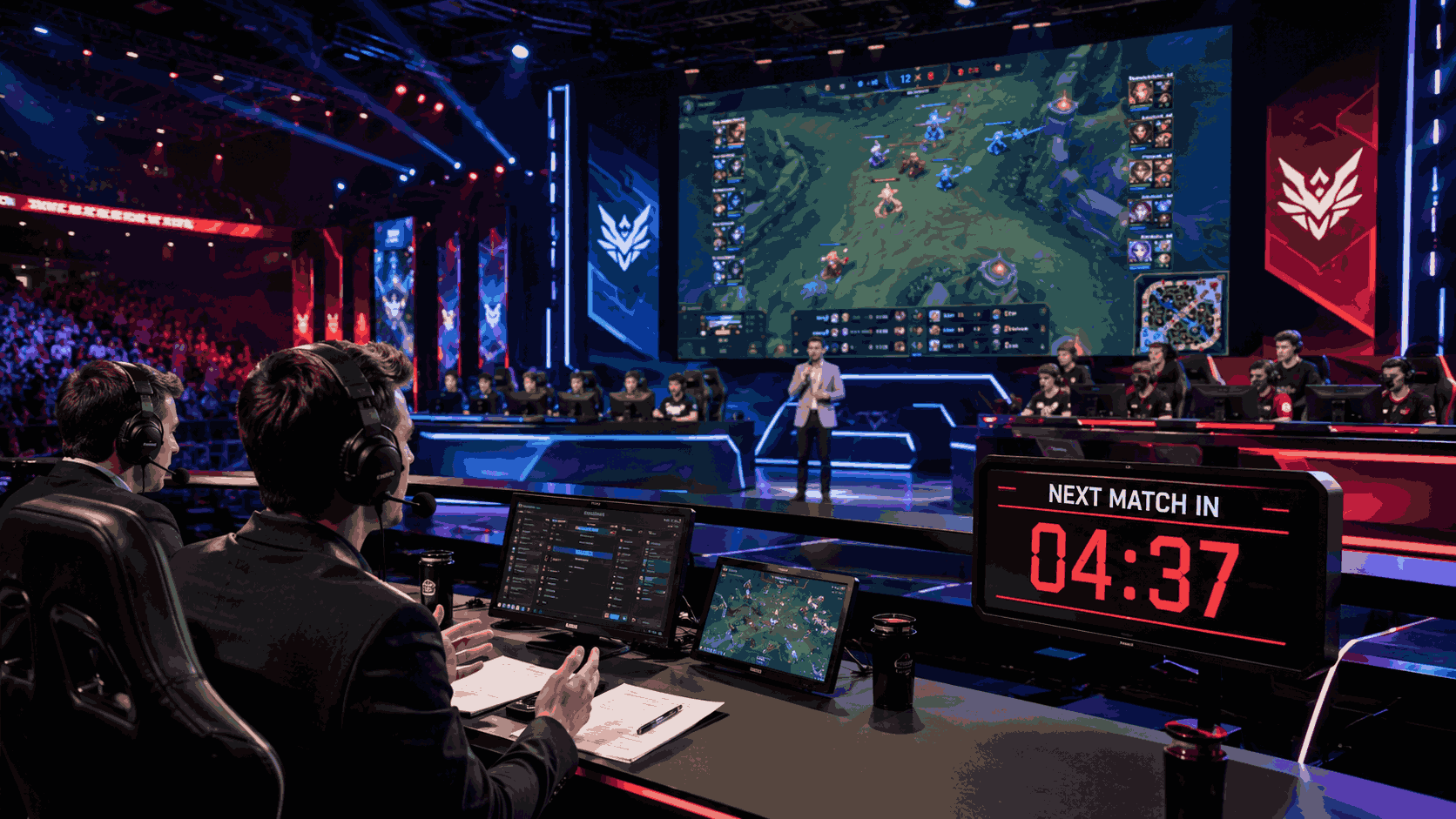
These days, esports competitions involve more than just participants and gameplay. Production personnel, stage managers, tournament administrators, casters, hosts, technical crews, and broadcast operators are all part of the team that works behind the scenes during a professional esports event. Each of these people needs to behave appropriately at the appropriate time. Every part, including the beginning of a match, breaks, interviews, and match preparation, depends on timing.
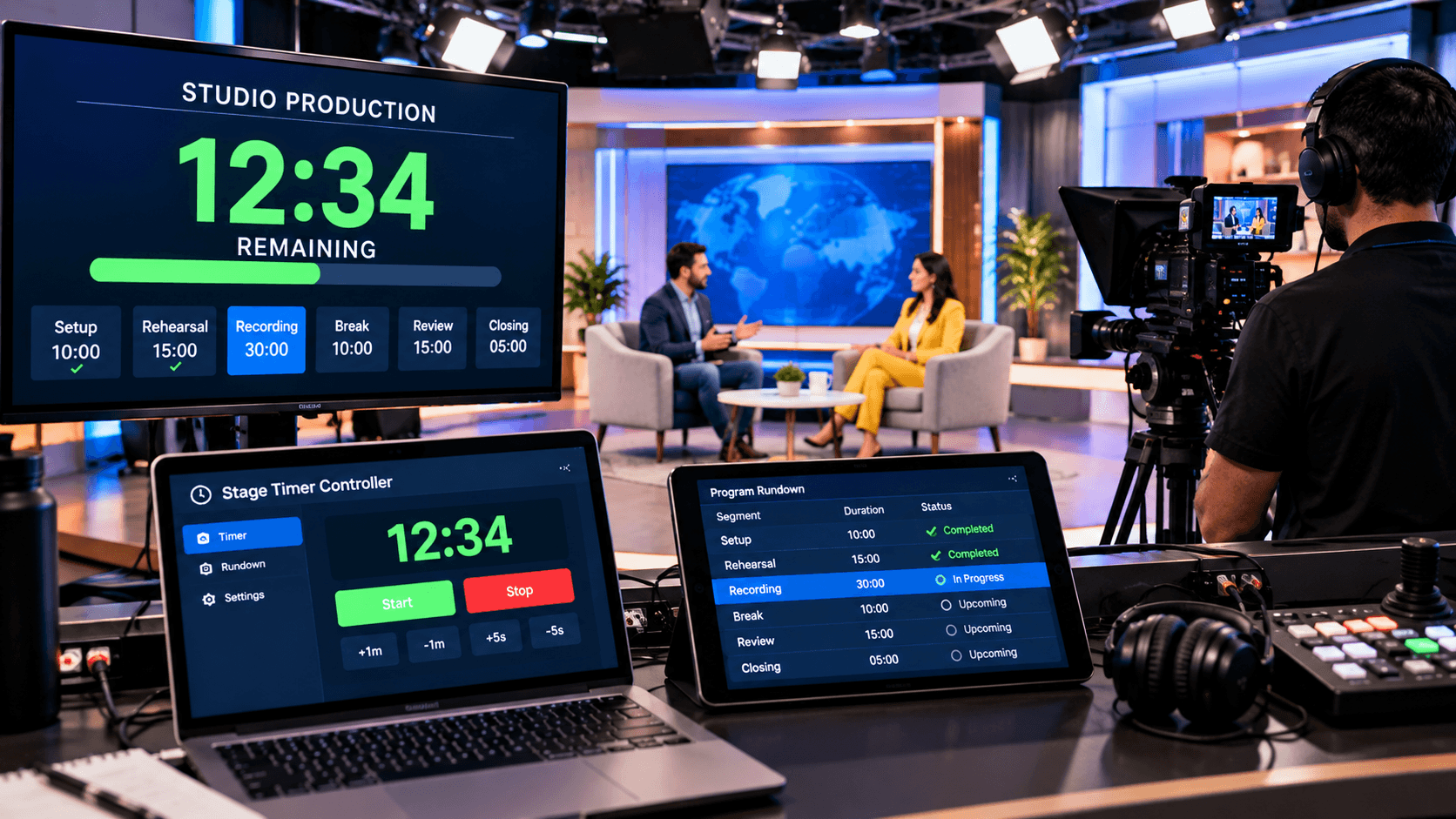
For esports production teams, this is where a remote countdown timer comes in very handy. It makes it possible to control the timer from one place while the countdown is shown on screens in several places. For example, a host or caster on stage can see the remaining time on their monitor, while a production operator can control the timer from the control room.
This essay will go into great detail about what a remote countdown timer is, how it works in esports production, and how professional gaming events can use it.
What is a Remote Countdown Timer?
A remote countdown timer is a timing system in which the countdown display and the timer control device are located independently.
A 10-minute countdown, for instance, can be initiated by the production manager of an esports competition using their laptop, and the countdown itself is displayed on a stage monitor.
As a result, the production crew no longer needs to approach the timer display to repeatedly manage it.
There are usually two primary parts to a remote timing setup:
Controller: The device that controls the timer.
Viewer Display: The screen that displays the amount of time left.
Since the control room, game stage, and caster desk may be situated in separate locations, this arrangement is especially helpful in esports production.
Why is timing important in esports production?
A professional esports tournament involves a continuous series of activities. These may include:
Player preparation
Match start
Team introductions
Caster segment
Technical setup
Match break
Analysis segment
Player interview
Stage transition
Award ceremony
The entire subsequent timetable may be impacted if any one of these sections takes longer than anticipated.
Let's take an example where a tournament's next event is set to begin at 4:00 PM, but the analysis part that comes after the previous match takes ten minutes longer than expected. Players, casters, the broadcast crew, and the audience might all have to wait in such a scenario.
By giving each section a distinct time reference, a remote countdown timer can assist reduce these delays.
How does the production team manage the timer remotely?
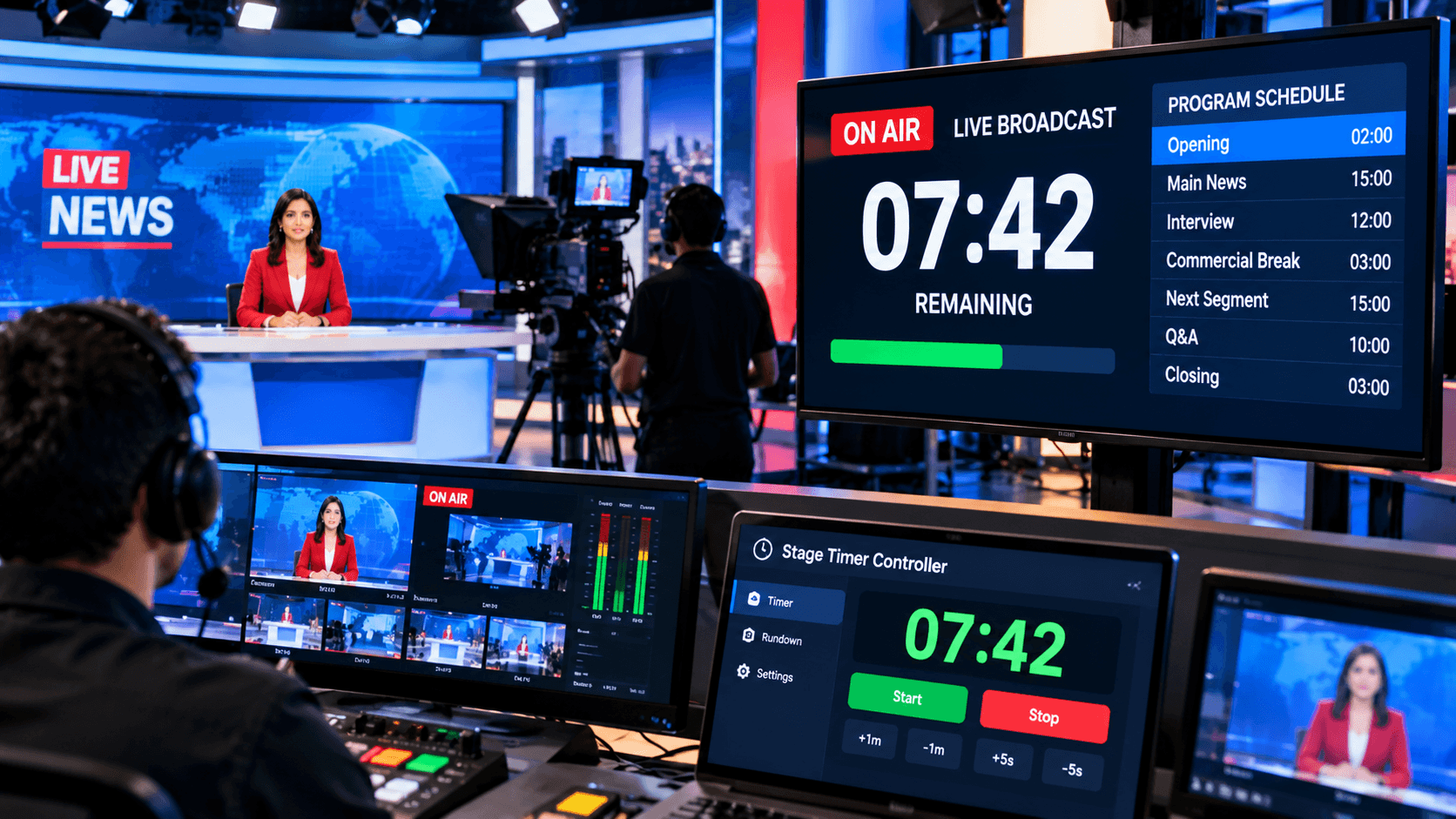
The production crew does not have to be in close proximity to the stage in order to control the timer during an esports event. From the control room or production workstation, a production operator can utilize a laptop, tablet, or smartphone to start, pause, and modify the countdown timer as needed. On their monitors, the host, casters, and other team members on stage may see how much time is left.
The production team's ability to quickly modify the timing to account for changes in the tournament schedule is the main benefit of remote management. For example, the operator can remotely change the timer if the technical setup takes longer than anticipated or if a match break needs to be prolonged by a few minutes. This kind of timing management can be more structured with the use of tools like stage timer controllers.
With this arrangement, the production team, casters, and stage management may collaborate using a single timing reference. It makes it possible to manage match starters, breaks, and stage transitions more expertly and lessens the need for frequent manual time changes.
Remote Countdown Timer for Casters and Hosts:
Casters and hosts are essential to maintaining audience interest during esports competitions. They have to finish their portions within a certain amount of time, whether it's before a match begins, during breaks, or when analyzing a match. They can adjust the tempo of their commentary, analysis, or introductions by using a remote countdown timer that clearly shows how much time is left.
The production team may control a remote countdown timer from a separate location, which is a big benefit. For example, the caster or host can see the countdown on their monitor while an operator in the control room starts or modifies the timer. As a result, there is no longer a requirement for manual signaling or continuous time updates via headsets.
Casters, hosts, and the production crew can all work together using a common timing reference thanks to remote timing solutions like stage timer controllers. This makes it easier to conclude match introductions, analytical segments, interviews, and breaks on time, making the esports broadcast more structured and polished.
How does a stage timer controller assist in esports production?
A timing system where the timer control and the viewer display run on different devices is very helpful in esports production. An organizer or production operator can control the timer with a stage timer controller, and the relevant team members can see the countdown on their own screens.
With this configuration, the timing can be controlled from the production desk while the remaining time is displayed on stage monitors or other spectator screens. As a result, it is not necessary for the operator and the stage crew to be at the same place.
Since the stage, caster desk, and production space are frequently located in separate places, this configuration is especially helpful in professional esports production.
Best Practices for Using a Remote Countdown Timer:
Before the esports competition starts, thoroughly test the timer system. Verify the proper operation of the controller and any required viewer displays.
Schedule the start of the game, player setup, breaks, caster segments, and stage changes in advance. As a result, during the live tournament, fewer timers need to be created.
Give a briefing on the timing workflow to every important member of the production team. They ought to be aware of when the countdown begins and what happens when the timer hits zero.
Update the timing right away if the timetable changes so that all pertinent teams are aware of the accurate amount of time left.
Conclusion:
Timing in esports production extends beyond the beginning of a contest. Precise scheduling is required for a number of phases, including player preparation, caster segments, breaks, interviews, technical setups, and stage transitions. The entire tournament schedule may be thrown off if the timing of these events is unknown.
The production team can efficiently manage timing from a single location and show the remaining time on multiple screens with a remote countdown timer. This makes it possible for the technical staff, hosts, casters, and stage management to work together using a same timing reference.
Professional gaming tournament production workflows can be streamlined by using remote timing solutions like stage timer controllers. Esports production teams can successfully keep matches, breaks, and stage transitions on schedule with careful preparation, shared countdowns, and remote control capabilities.