One of the most important abilities in the modern world is public speaking. Your ability to communicate successfully may leave a lasting impression on your audience, whether you are giving a keynote address, conducting a workshop, instructing a class, making a business presentation, or speaking at a church service.
However, adhering to a timetable is a problem that many presenters encounter. Even seasoned speakers occasionally run out of time before concluding, speak too rapidly, or focus too much on one topic. Ineffective time management can lower a presentation's overall impact, interfere with event schedules, and lower audience participation.
The good news is that public speaking punctuality is a talent that can be developed. Speakers may produce confident, well-organized, and professional presentations while adhering to their time constraints with the right preparation, practice, and equipment.
We'll look at doable tactics in this tutorial to assist you keep on time when giving public speeches and make sure every presentation goes off without a hitch.
Why is time management important in public speaking?
In public speaking, time management is essential since it guarantees that your complete message is effectively and clearly communicated to the audience. The audience stays interested and learns more about the subject when a speaker finishes their speech within the allocated time. On the other hand, going beyond the allotted time may cause the audience's focus to stray and lessen the effect of the presentation.
A professional speaker is known for adhering to time limits at every occasion. Since each session is usually given a specified time window by the organizers, ending on time shows consideration for other speakers and the event schedule as a whole. The speaker's credibility and professional image are strengthened by this.
Additionally, efficient time management enables the speaker to concentrate on important ideas. The opening, primary substance, and conclusion all receive sufficient attention when a presentation is organized in accordance with the allocated time. As a result, the speech is memorable, impactful, and balanced.
Why do people run over time during public speaking?
Insufficient preparation is the main cause of going over the allocated time when giving a public speech. Many presenters make mistakes when estimating how long their planned material will actually take. As a result, they either have to rush through important points at the conclusion or speak longer than planned.
Straying from the subject is another frequent cause. It can occasionally take longer than anticipated to include more instances, long anecdotes, or excessive audience engagement. This may upset the presentation's equilibrium and affect the event's timetable.
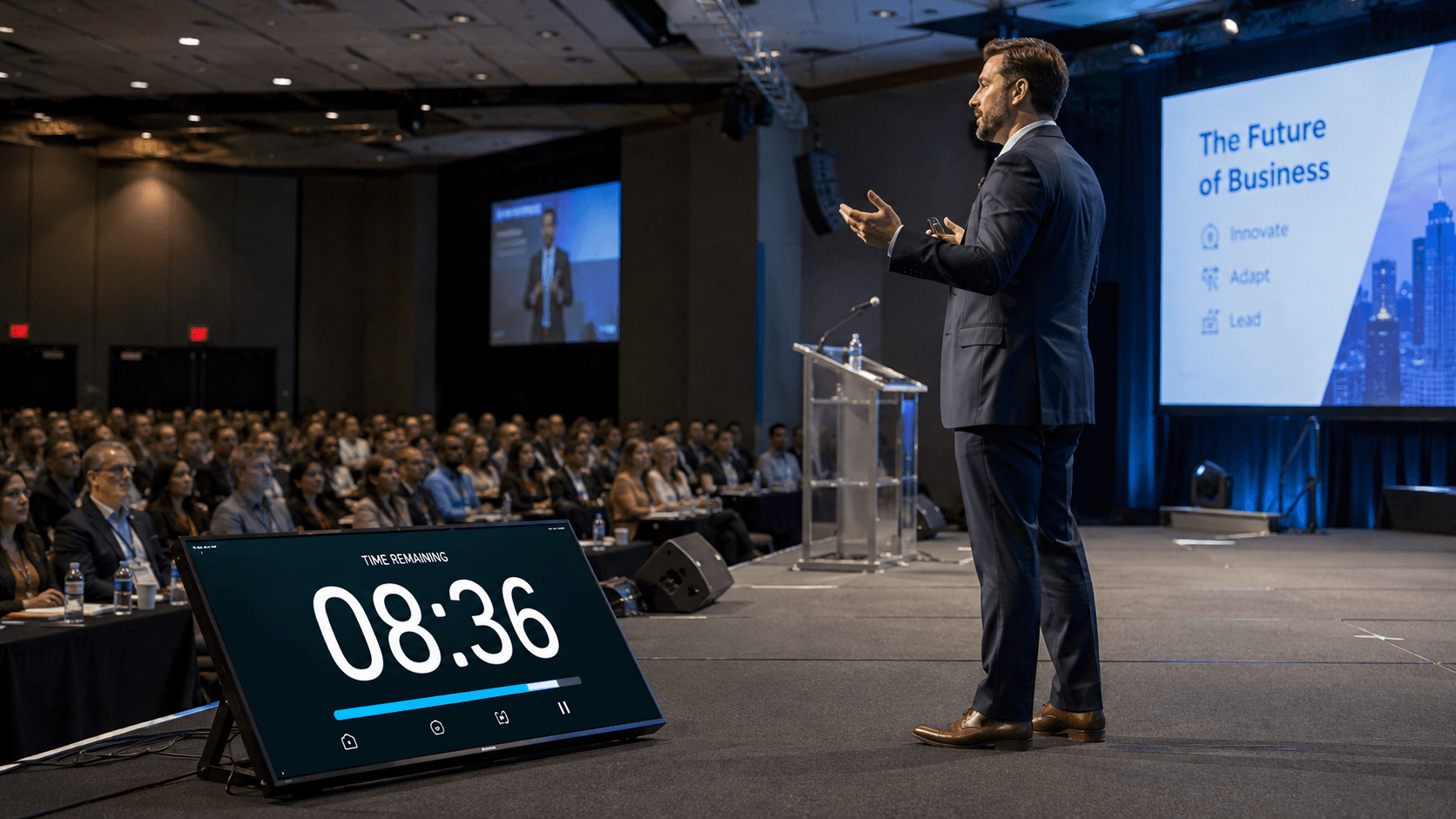
Another major problem is not keeping track of time. Speakers frequently forget how much time has passed while they are totally absorbed in their presentation. In these situations, visible timers and stage timer controls can help presenters finish their presentations within the allocated time by giving a clear indicator of the time.
Tips for Staying on Schedule During Public Speaking:
Making a detailed presentation outline is the first step towards staying on schedule when giving a speech in front of an audience. Set aside a certain amount of time for each area of your speech, such as the introduction, main body, and conclusion. This keeps the presentation balanced and keeps you from devoting too much attention to any one subject. To gain a precise understanding of the actual timing, it's also crucial to practice several times before taking the stage.
It's also very helpful to use a countdown or visual timer during the presentation. It enables the speaker to continuously monitor the amount of time left and modify their pace as necessary. Effective time management also requires avoiding superfluous details and digressions.
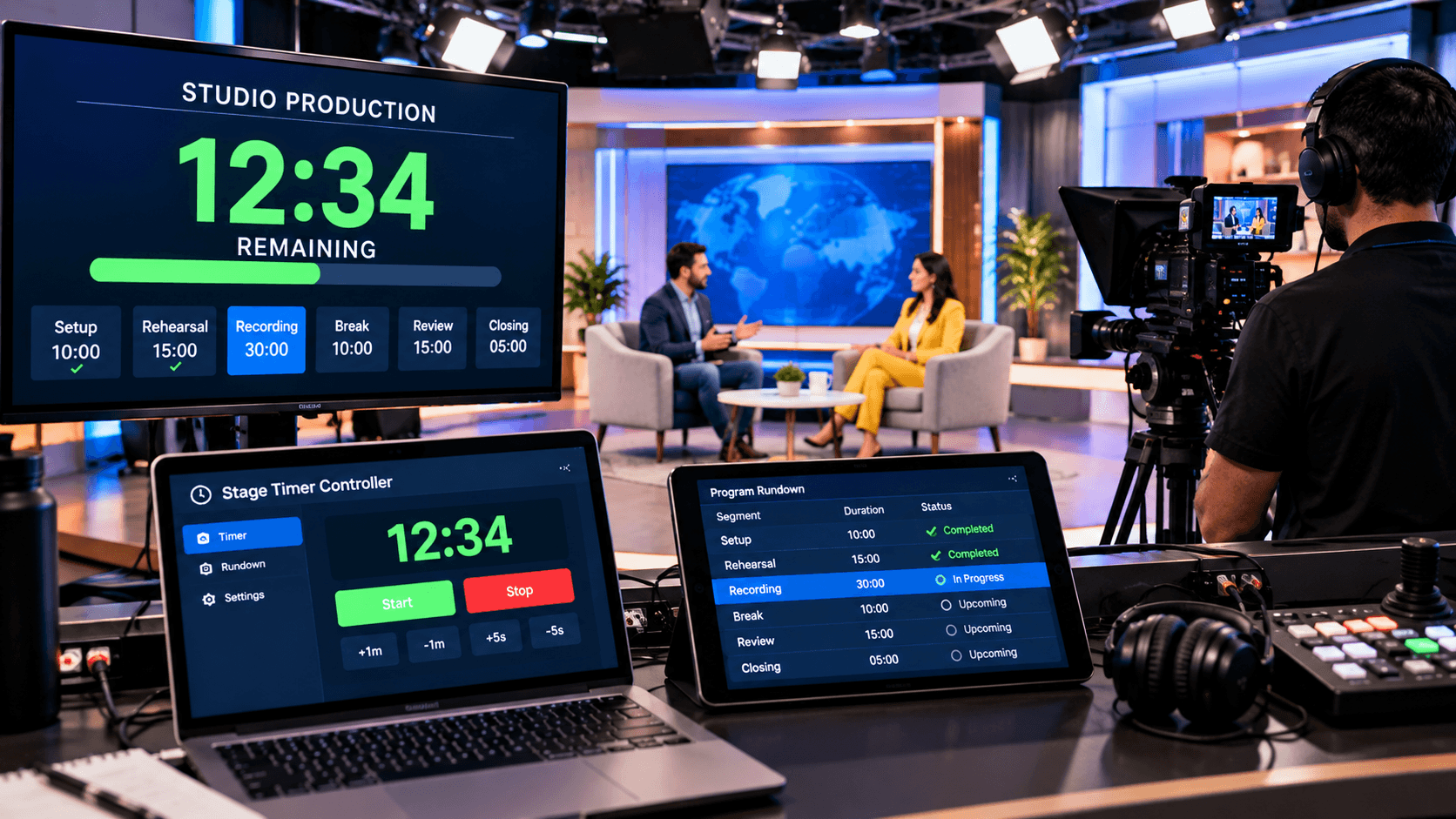
If there will be a Q&A period during the event, schedule it ahead of time. Additionally, by utilizing devices like stage timer controllers, presenters can more effectively regulate their pace. These technologies improve time awareness and give the presentation a more polished, structured appearance.
The Importance of a Timer in Public Speaking:
Speaking in front of an audience requires efficient time management. A timer keeps track of how much time is left when a speaker has to finish their speech in a predetermined amount of time. This enables the speaker to avoid devoting too much time to any one subject and to more effectively pace their presentation.
The presentation is more structured and polished when a timer is used. It guarantees there is enough time for the conclusion and aids the speaker in covering important themes on time. It also facilitates the upkeep of the event calendar for organizers and other speakers.
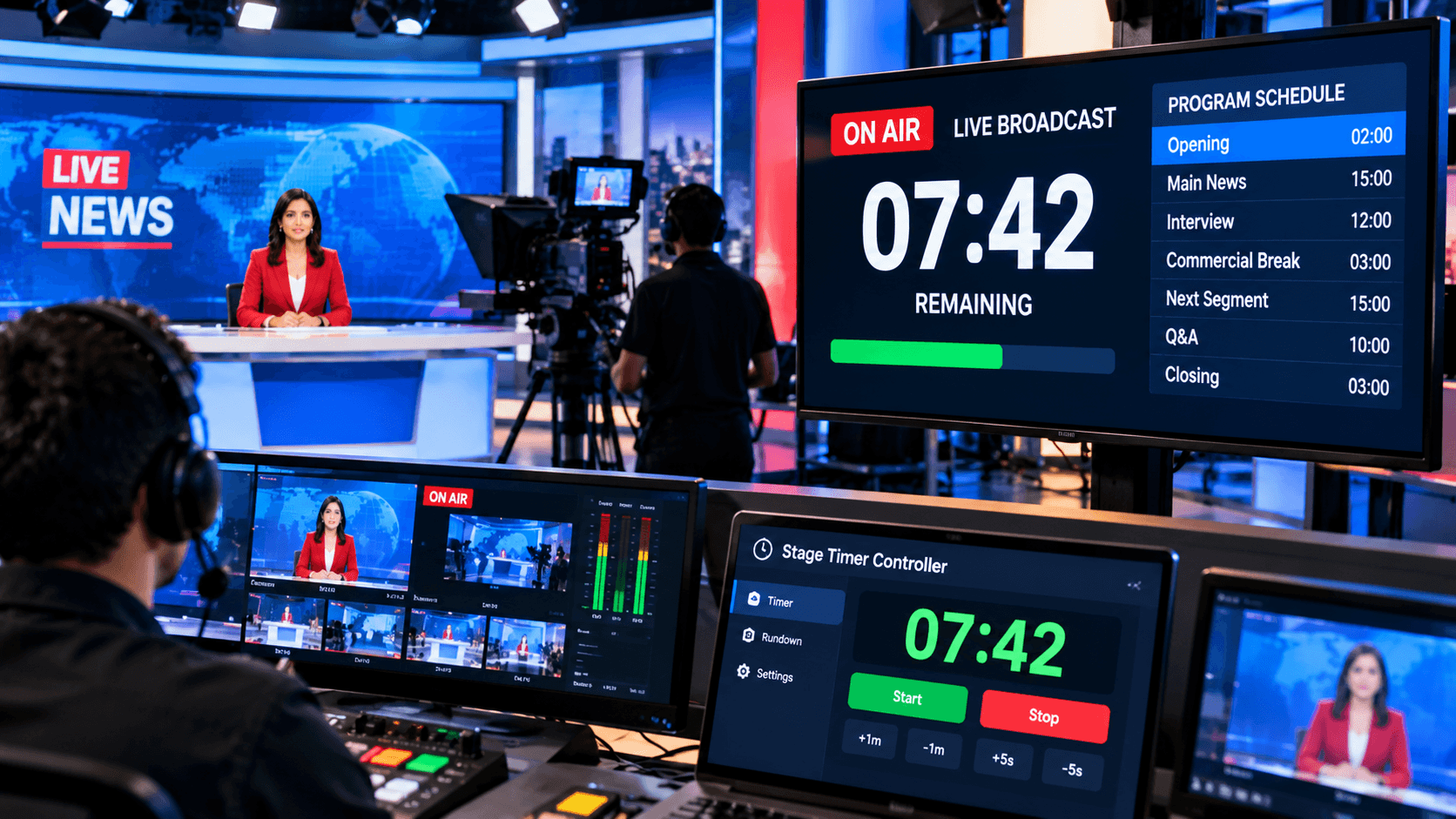
Visual timers are very helpful at conferences, seminars, and big events. Stage timer controllers, for example, give presenters visual alerts and clear countdown displays so they can stay on course and give a more powerful presentation.
How does a Stage Timer Controller help?
During public speaking, a Stage Timer Controller makes time management simple and efficient. It gives presenters a clear visual countdown so they can keep an eye on how much time is left without being distracted and modify their presentation as necessary.
Speakers are informed when their time is running out via its visual alert features and real-time control. This makes it unnecessary to interrupt the discourse, allowing the presentation to end naturally.
A stage timer controller helps presenters stay on time and give a more polished presentation at conferences, seminars, training sessions, church services, and corporate gatherings.
Conclusion:
When it comes to public speaking, following the schedule is just as crucial as giving a great speech. Effective time management is just as important to a presentation's success as its substance. Effective time management increases the impact of a speaker's message and keeps the audience interested.
Anyone can improve their public speaking abilities with the correct preparation, consistent practice, and resources like visual timers. Modern tools, such stage timer controllers, are especially helpful for keeping presenters aware of the time so they can give more structured and polished presentations.
Make time management a key component of your preparation if you want your next presentation to end on schedule and make an impact on your audience.