In today's world, event management is more than just arranging; it has become a really professional undertaking. Whether it's a conference, seminar, webinar, or stage performance, the success of any event depends on how well it sticks to its schedule. Even the most spectacular event might appear unorganized and unprofessional if time management is not acceptable.
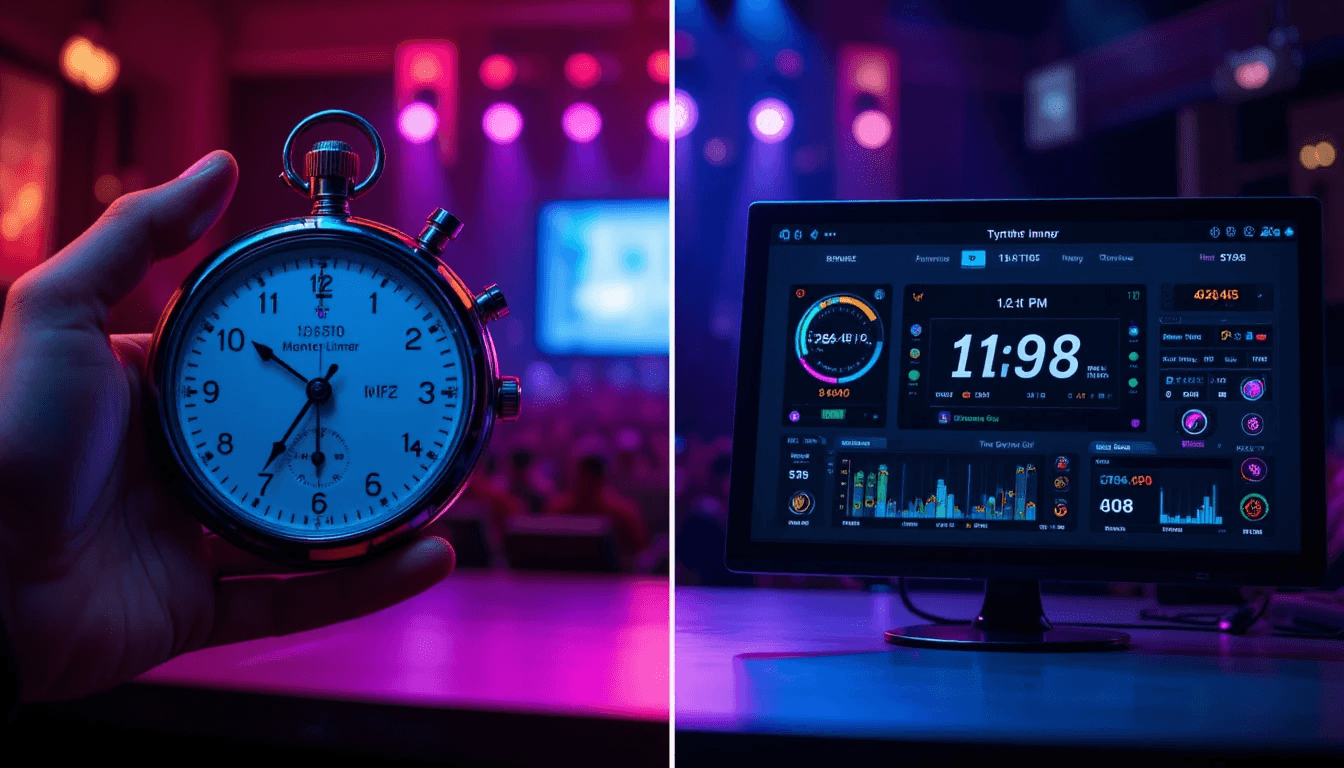
As a result, today's organizers are frequently torn between two different approaches: manual timing (tracking time with a clock or stopwatch) and stage timing (using digital timers). On one hand, there is the conventional method—simple and straightforward—and on the other, there is current technology, which is often viewed as more exact and effective.
The question now is: which of these two strategies is better suited to your individual event? In this article, we will compare Stage Timers with Manual Timing to help you make an informed selection for your next event.
What is Manual Timing?
Manual timing is a classic way of time management in which an organizer or team member uses a clock, stopwatch, or mobile timer to track the duration of an event. In this approach, the time allowed to each section or speaker is manually monitored and controlled. As the allotted time expires, the organizer tells the speaker via gestures, visual clues, or spoken directions.
This method is easy and may be applied without any technical setup, hence it is frequently used for small-scale events or meetings with little resources. It does not require any specialist software or digital instruments, making it a simple and practical solution, especially for low-key or informal occasions.
Manual Timing, on the other hand, is fully dependent on human control, which carries with it an inherent danger of inaccuracy. If the organizer's focus wavers or a cue is not delivered at the appropriate time, the entire timetable may be disturbed. As a result, this strategy is often regarded as less effective for large-scale or professional gatherings.
What is a Stage Timer?
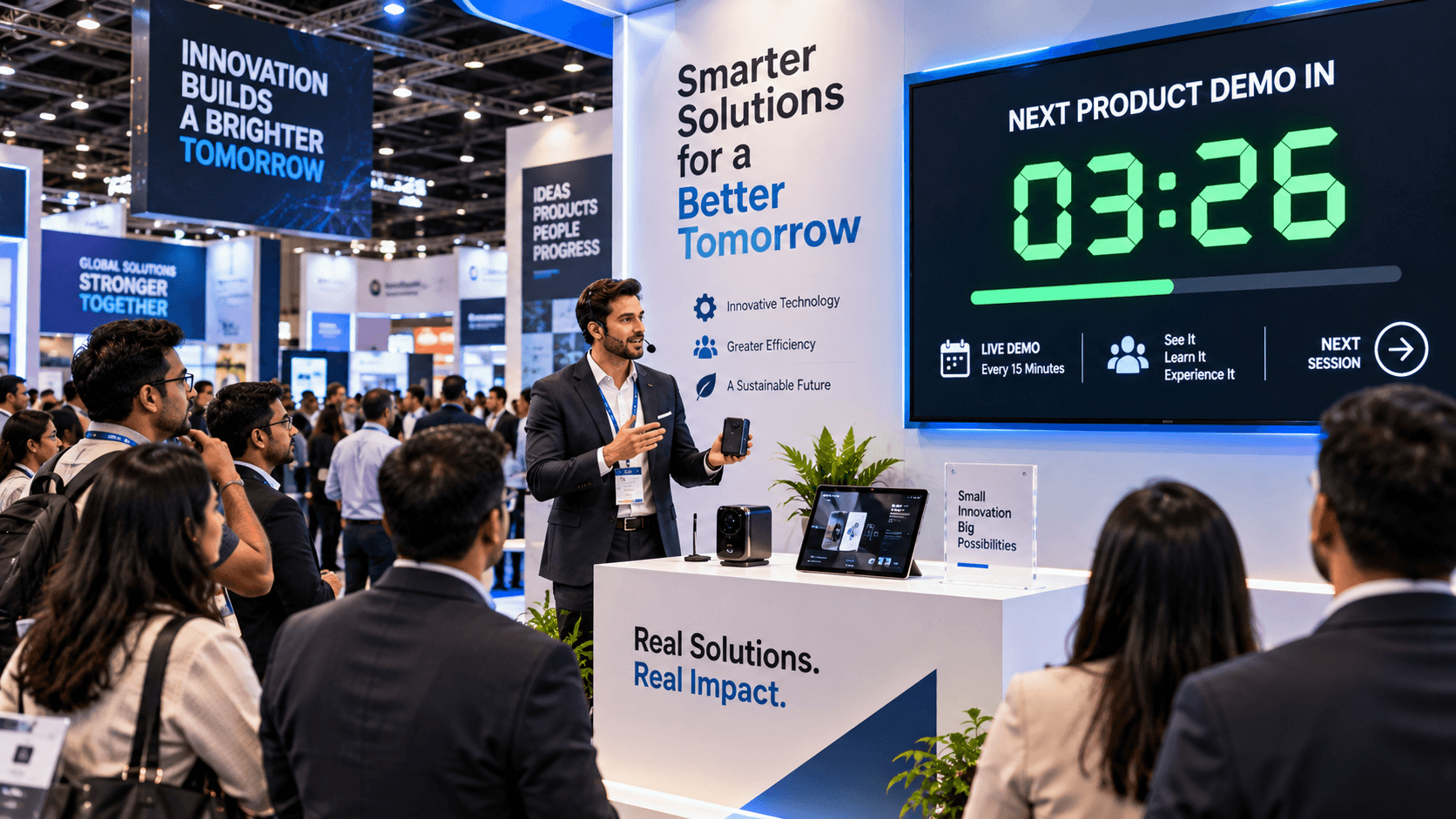
Stage Timer is a digital time management application that is used to manage time during events, conferences, seminars, and stage shows. It shows a countdown or count-up timer on a screen or gadget, giving speakers and organizers a clear idea of how much time left or has passed.
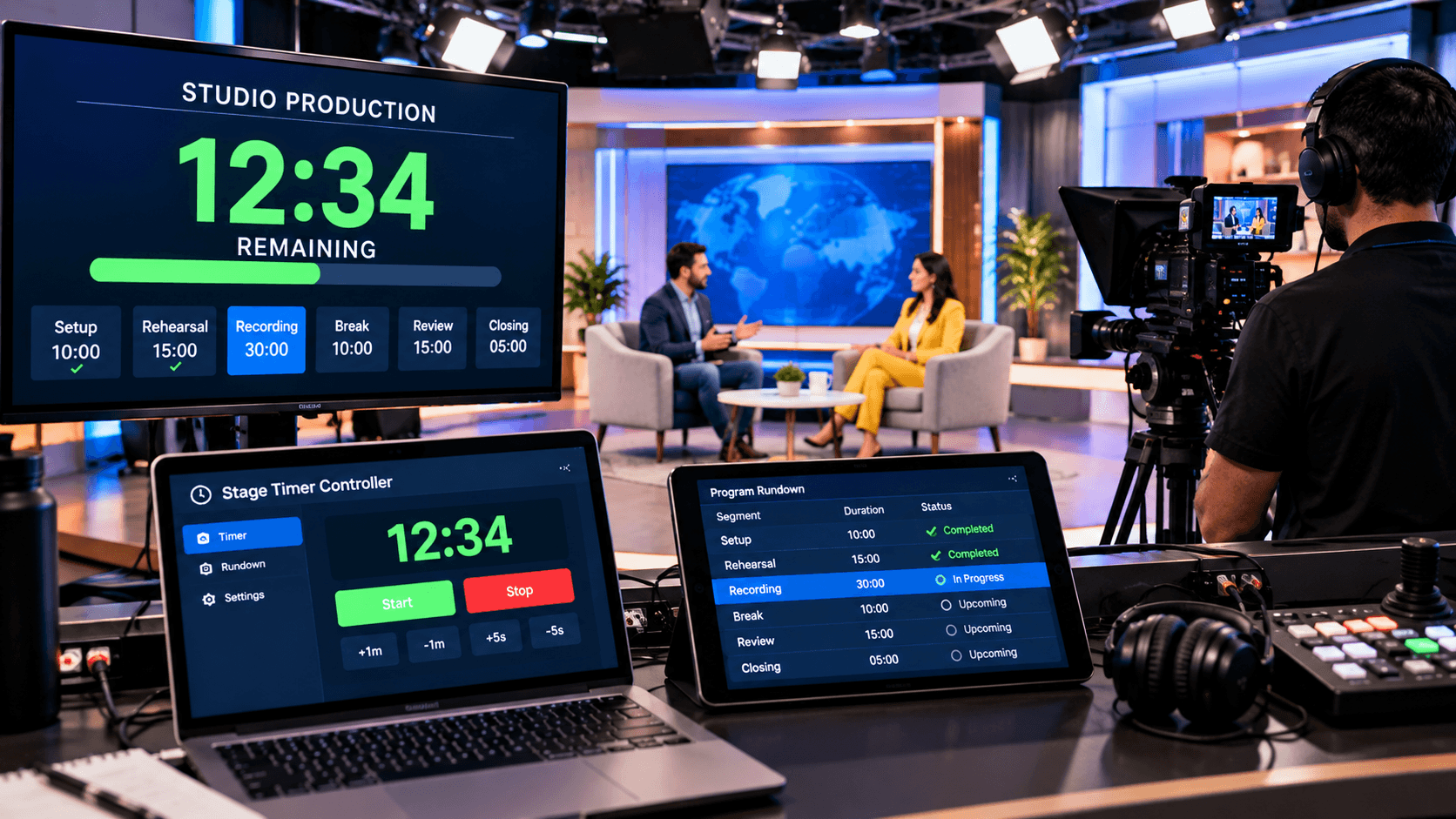
Stage Timer's major feature is that it can be controlled in real time via a dashboard. Organizers can set several timers, pause or resume them, and alter the time instantaneously if necessary. This function is especially handy for large-scale events with several speakers and segments.
Stage Timer vs. Manual Timing: Which is Better?
The goal of both stage timers and manual timers is to maintain an event's timeliness. Manual timing, on the other hand, depends only on human intervention, such as using signaling speakers and a clock or stopwatch to keep track of the time. During large-scale events, this approach becomes more challenging to handle and has a higher chance of error.
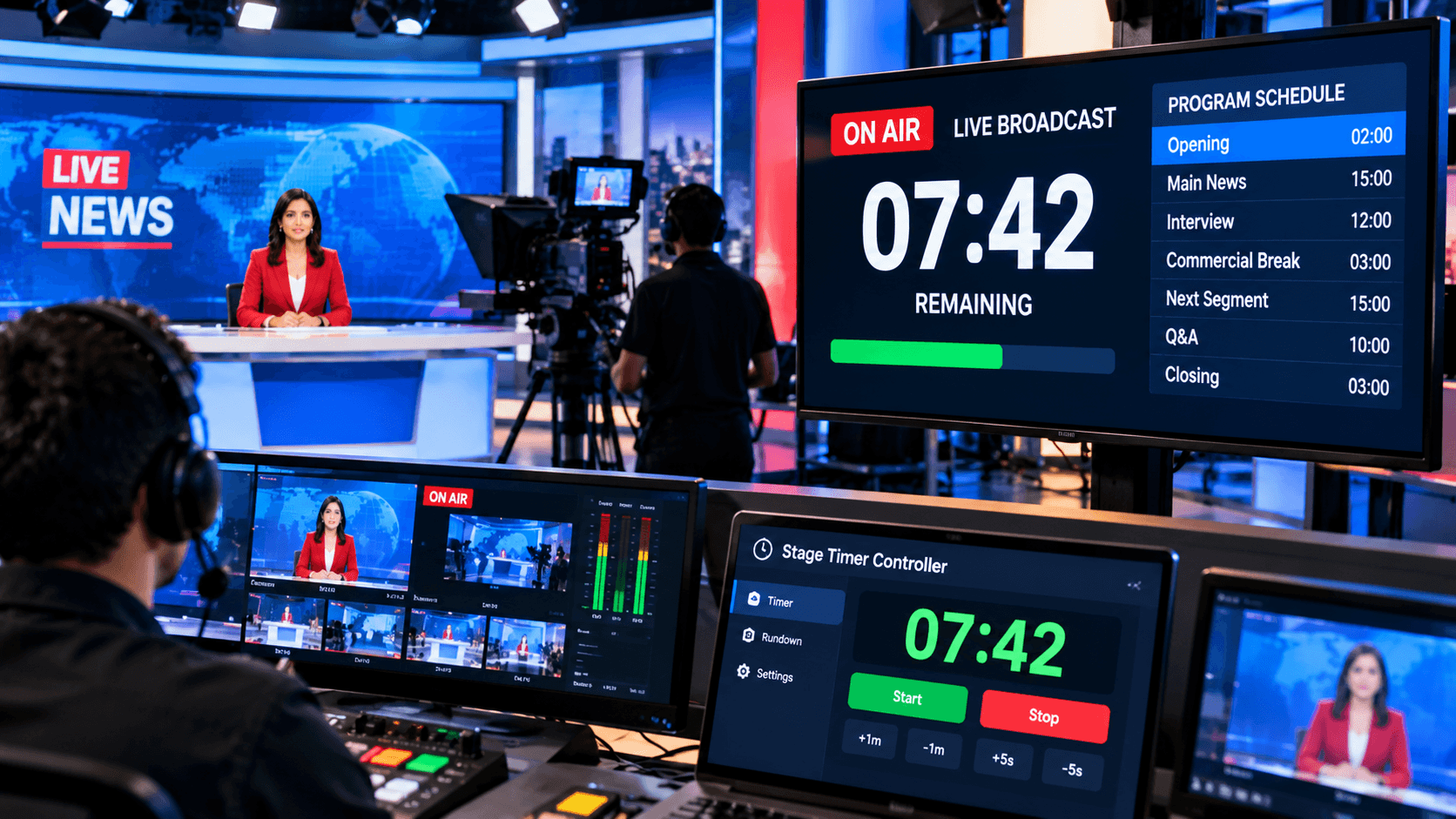
A Stage Timer, on the other hand, provides a clever, electronic solution that monitors and manages time in real-time. With features like dashboard controls, visual notifications, and numerous timers, it makes sure that presenters and organizers are always aware of the current time. As a result, the event seems more professional and well-organized.
In the end, a stage timer is still the best option for larger, formal events, even though manual timing might be adequate for smaller ones. In addition to improving time accuracy, it is essential to making sure the event goes off without a hitch.
Why is the Stage Timer Controller the best choice?
The Stage Timer Controller is a clever event management tool that gives you complete control over timekeeping. You can manage all timers from a single, central area thanks to its user-friendly dashboard. You can easily set, control, and keep an eye on each timer during your event, regardless of the number of speakers or different parts. This almost removes the chance of timing problems, guaranteeing a flawless event.
Additionally, the Stage Timer Controller's Real-Time Control and Multiple Timers functions are its strongest points. Throughout the event, timers can be paused, restarted, or changed at any time. Additionally, it's simple to give speakers timely cues with Visual Alerts and Custom Messages. This preserves the event's general flow while simultaneously saving time.
In conclusion:
It is evident from a comparison of stage timers and manual timers that digital solutions are more dependable and efficient in the modern world. Even while manual timing is straightforward, there is a greater chance of mistakes and limits, especially in large-scale and complicated events.
On the other hand, a stage timer gives the entire event a polished, well-organized framework in addition to precisely controlling the time. This makes the job easier for organizers and gives speakers precise instructions.
Ultimately, using a stage timer is a wise and contemporary decision if you want your event to be effective, timely, and powerful.